Introduction
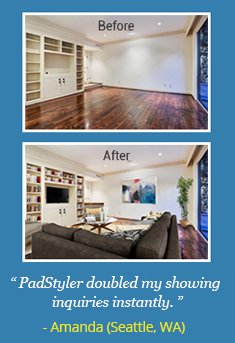
Common Virtual Staging Mistakes and How to Avoid Them is one of the most important topics every real estate agent, property developer, and real estate photographer should understand before marketing a property online. Virtual staging has transformed modern real estate by allowing empty spaces to become beautifully furnished digital homes that attract buyers without the cost of physical staging. However, poor virtual staging can have the opposite effect. Unrealistic furniture, incorrect room proportions, inconsistent lighting, and misleading designs can reduce buyer trust and hurt listing performance. Learning Common Virtual Staging Mistakes and How to Avoid Them helps real estate professionals create visually compelling listings that increase engagement, generate more inquiries, and ultimately sell properties faster. Platforms like PadStyler combine advanced AI technology with professional design expertise to produce realistic, high-quality virtual staging that enhances property marketing while maintaining accuracy.
Why Virtual Staging Matters in Today’s Real Estate Market
The majority of homebuyers begin their property search online, making listing images the first opportunity to capture attention. Empty rooms often appear smaller, colder, and less inviting. Buyers frequently struggle to visualize how a space can function, causing them to skip listings that lack attractive visuals.
Virtual staging bridges this gap by transforming vacant rooms into warm, stylish living spaces. Professionally staged images help buyers emotionally connect with a property before scheduling a viewing. High-quality virtual staging can improve click-through rates, increase time spent on listings, and generate more qualified leads.
Despite these advantages, success depends on realistic execution. Poorly staged images can damage credibility instead of enhancing it.
Common Virtual Staging Mistakes and How to Avoid Them: Using Unrealistic Furniture
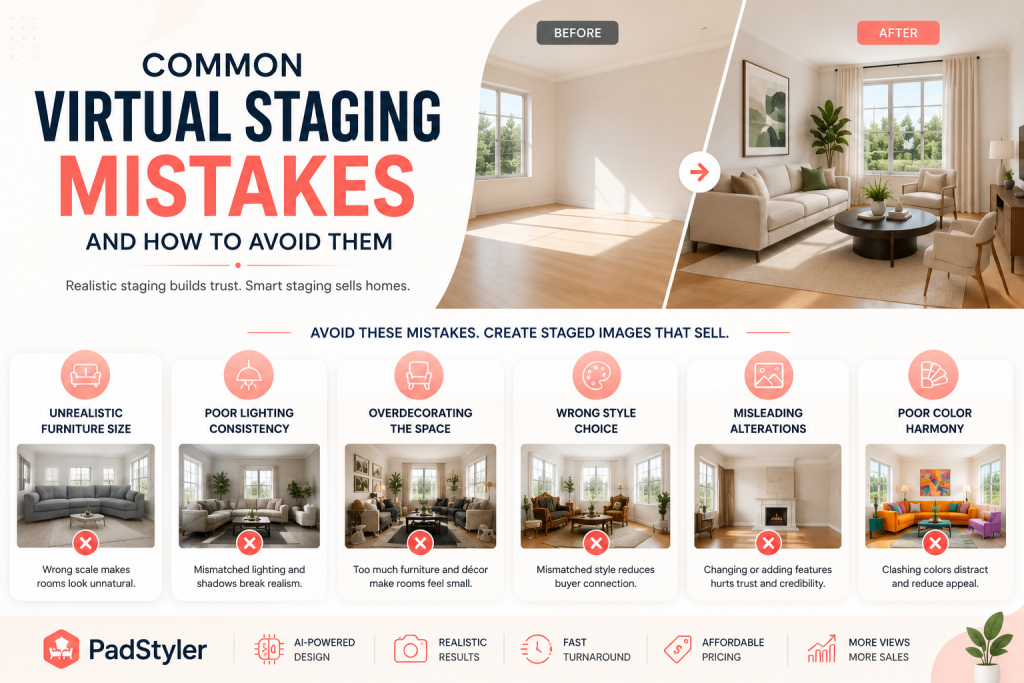
One of the biggest virtual staging mistakes is selecting furniture that appears unrealistic or disproportionate.
Oversized sofas, tiny dining tables, or floating furniture immediately make images look artificial. Buyers quickly notice when furniture dimensions do not fit the room naturally. This creates doubt about the property’s actual size.
Professional virtual staging begins with understanding room dimensions and selecting furniture that matches the available space. Every item should appear naturally positioned while maintaining comfortable walking areas and practical layouts.
PadStyler uses advanced AI combined with experienced designers to ensure every staged room maintains realistic proportions and balanced interior design.
Common Virtual Staging Mistakes and How to Avoid Them: Ignoring Architectural Style
Every property has its own architectural personality.
A modern condominium should not feature rustic farmhouse furniture, while a luxury waterfront home may not benefit from traditional country décor. One of the most overlooked virtual staging mistakes is ignoring the property’s existing architectural character.
Matching furniture styles with flooring, wall finishes, windows, lighting fixtures, and overall home design creates consistency throughout the images. Buyers appreciate homes that feel thoughtfully designed rather than randomly decorated.
Selecting interior styles that complement the property’s architecture strengthens visual appeal and creates a more believable presentation.
Poor Lighting Consistency
Lighting plays a significant role in realistic virtual staging.
A common mistake occurs when digitally added furniture receives different lighting than the original room. Shadows may fall in the wrong direction, reflections disappear, or brightness levels fail to match natural sunlight entering through windows.
These inconsistencies make virtual staging immediately obvious.
Professional editing carefully analyzes the room’s lighting before placing furniture. Every object should cast natural shadows while maintaining realistic reflections and highlights. This attention to detail creates images that appear authentic instead of computer-generated.
Using Low-Quality Furniture Models
Virtual staging is only as convincing as the digital furniture itself.
Cheap furniture models with blurry textures, unrealistic fabrics, poor wood finishes, or outdated designs reduce the quality of the entire listing. Buyers often associate low-quality visuals with poor property maintenance.
High-resolution furniture assets create polished, premium-looking interiors that attract modern buyers.
PadStyler continuously updates its design library with contemporary furniture collections, luxury accessories, and current interior design trends that reflect today’s buyer expectations.
Overcrowding Rooms with Too Much Furniture
Another major issue among Common Virtual Staging Mistakes and How to Avoid Them is adding excessive furniture.
Trying to showcase every possible function often leads to crowded rooms filled with oversized sofas, multiple chairs, decorative tables, large plants, artwork, and accessories.
Instead of making spaces feel luxurious, clutter makes rooms appear smaller.
Minimalist staging often performs better because it highlights the property’s actual size. Furniture should define each room’s purpose while leaving enough open space for buyers to appreciate the layout.
Simple, elegant staging creates cleaner visuals and stronger emotional appeal.
Choosing the Wrong Target Buyer Style
Not every buyer wants the same interior design.
A downtown apartment targeting young professionals should look very different from a suburban family home or a luxury waterfront property.
Generic staging that ignores buyer demographics often reduces effectiveness.
Successful virtual staging considers factors such as location, neighborhood, property price, and likely buyer preferences. Matching interior styles to buyer expectations creates stronger emotional connections.
PadStyler offers multiple design styles ranging from modern and Scandinavian to luxury contemporary and transitional interiors, allowing every property to appeal to its intended audience.
Forgetting Exterior Consistency
Virtual staging focuses primarily on interiors, but buyers compare interior images with exterior photos.
Luxury staged interiors paired with neglected landscaping or outdated exterior photographs create conflicting impressions.
Property marketing should maintain visual consistency across every image.
Enhancing exterior photos through professional editing while keeping them truthful helps create a cohesive marketing presentation that builds buyer confidence.
Common Virtual Staging Mistakes and How to Avoid Them: Misleading Buyers
One of the most damaging virtual staging mistakes is creating unrealistic expectations.
Adding fireplaces that do not exist, removing structural columns, enlarging rooms digitally, or changing permanent architectural features crosses ethical boundaries.
Virtual staging should enhance presentation without misrepresenting the property.
Professional real estate marketing clearly communicates that images are virtually staged while preserving the property’s actual structure. Transparency builds trust and reduces disappointment during property visits.
Ignoring Color Harmony
Interior colors influence buyer emotions.
Poor color combinations make rooms feel chaotic and distracting. Bright, clashing furniture colors or inconsistent decorative themes reduce visual appeal.
Professional staging uses coordinated color palettes that complement flooring, wall colors, cabinetry, and natural lighting.
Neutral tones combined with tasteful accent colors appeal to a broader audience while allowing buyers to imagine their own furniture within the space.
Balanced colors create timeless interiors that remain attractive to different buyer preferences.
Inconsistent Room Design Throughout the Property
Every room should feel connected.
One common virtual staging mistake is decorating each room in a completely different style. A modern living room followed by a traditional dining room and industrial bedroom creates visual confusion.
Professional staging establishes a consistent design language throughout the property.
Furniture styles, materials, textures, and color palettes should transition naturally from one room to another, giving buyers the impression of a thoughtfully designed home.
Neglecting Image Resolution
High-quality images are essential for online real estate marketing.
Blurry virtual staging reduces professionalism and weakens buyer interest. Many property portals compress images, making quality even more important.
Professional virtual staging begins with high-resolution photography. Detailed editing preserves image sharpness while ensuring furniture, textures, and architectural features remain crisp across desktop and mobile devices.
PadStyler delivers high-resolution staged images optimized for MLS platforms, real estate websites, social media campaigns, and digital advertising.
Relying Entirely on Automation
Artificial intelligence has dramatically improved virtual staging, but relying entirely on automation can sometimes produce unrealistic layouts or awkward furniture placement.
The best results combine AI speed with human design expertise.
PadStyler uses AI to accelerate production while experienced designers review every project for realism, balance, and buyer appeal. This hybrid workflow delivers faster turnaround without compromising quality.
Why Professional Virtual Staging Outperforms DIY Editing
Many agents attempt virtual staging using inexpensive software or free online tools.
While these solutions may appear affordable initially, they often produce inconsistent quality, unrealistic furniture placement, inaccurate scaling, and poor lighting integration.
Professional virtual staging provides carefully designed interiors, realistic rendering, architectural accuracy, and premium furniture selections that improve listing performance.
Professional images strengthen brand credibility while helping listings compete in increasingly crowded real estate markets.
How PadStyler Helps You Avoid Common Virtual Staging Mistakes
PadStyler was developed specifically to help real estate professionals create realistic property visualizations that inspire buyer confidence.
Its advanced AI technology quickly transforms vacant rooms into beautifully furnished interiors while maintaining realistic proportions and lighting. Experienced designers review projects to ensure architectural consistency, appropriate furniture selection, and accurate styling for the target market.
Beyond virtual staging, PadStyler also offers AI renovation previews, custom staging, digital floor plans, 3D renderings, and product visualizations, making it a complete visual marketing solution for agents, brokers, developers, and builders.
By combining speed, realism, and affordability, PadStyler helps professionals market listings more effectively while avoiding the mistakes that reduce buyer trust.
The Future of Virtual Staging
As artificial intelligence continues evolving, virtual staging will become even more personalized and interactive.
Future buyers may customize furniture styles in real time, compare multiple interior themes instantly, or explore immersive staged environments before scheduling a property visit.
Despite technological advancements, realism, transparency, and thoughtful design will remain the foundation of successful virtual staging.
Professionals who prioritize quality over shortcuts will continue building stronger buyer relationships and achieving faster property sales.
Conclusion
Understanding Common Virtual Staging Mistakes and How to Avoid Them enables real estate professionals to create marketing visuals that inspire confidence rather than skepticism. Realistic furniture placement, accurate lighting, balanced interior design, consistent styling, and ethical presentation all contribute to successful property marketing. Virtual staging is not simply about making a room look attractive—it is about helping buyers visualize themselves living in the home while maintaining complete trust in the listing.
PadStyler makes this process simple by combining AI-powered technology with professional design expertise to produce stunning, photorealistic virtual staging. Whether you are marketing a single property or managing hundreds of listings, choosing high-quality virtual staging helps attract more buyers, generate more inquiries, and achieve faster sales in today’s competitive real estate market.