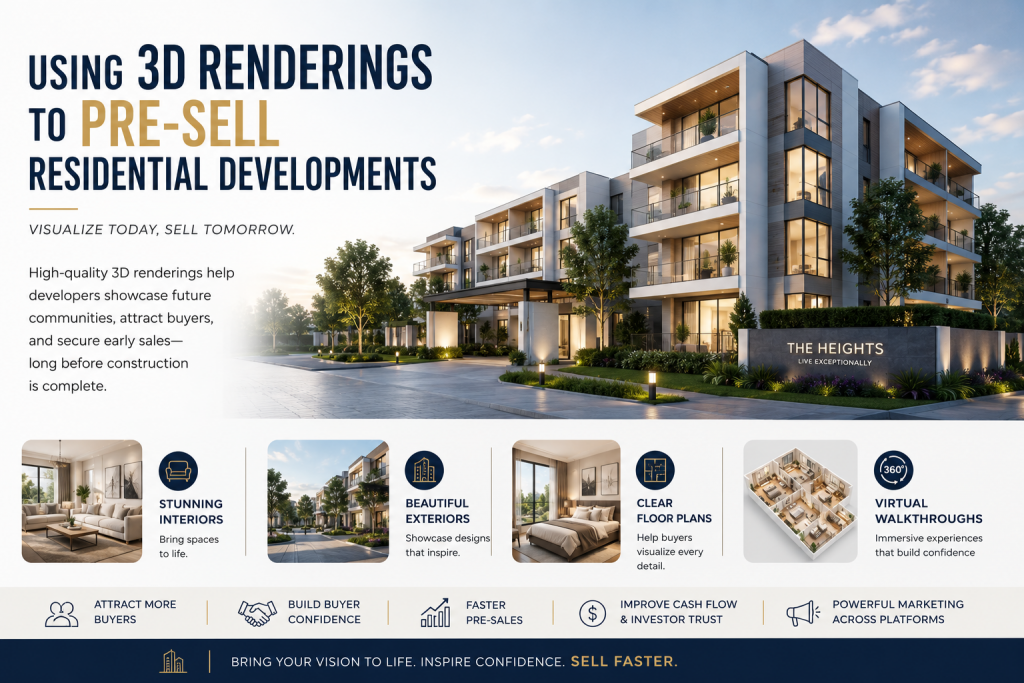
The real estate industry has become increasingly competitive, making it essential for developers to market projects before construction is complete. Using 3D Renderings to Pre-Sell Residential Developments has become one of the most effective ways to generate buyer interest, secure early sales, and build investor confidence. Instead of relying on blueprints or unfinished construction sites, developers can showcase stunning, photorealistic visualizations that allow buyers to experience a future property before it exists.
Today’s buyers expect more than floor plans and architectural sketches. They want to visualize how a home will look, how natural light enters each room, what the landscaping will resemble, and how the finished development fits into its surroundings. Padstyler 3D architectural renderings, photorealistic property visualization, and virtual walkthroughs make this possible, helping developers sell properties faster while reducing marketing challenges.
Whether you’re launching a luxury housing project, townhouse community, apartment complex, or mixed-use residential development, investing in professional 3D renderings can significantly improve pre-sales performance.
Why Pre-Selling Residential Developments Matters
Pre-selling allows developers to secure buyers before construction is completed. Early sales provide numerous advantages, including improved cash flow, reduced financial risk, and stronger project credibility.
Benefits include:
- Better financing opportunities
- Increased investor confidence
- Faster project funding
- Reduced inventory after completion
- Higher market visibility
- Stronger buyer trust
However, convincing buyers to purchase a property that doesn’t yet exist can be challenging. This is where Using 3D Renderings to Pre-Sell Residential Developments transforms the sales process.
What Are 3D Renderings?
3D renderings are digitally created visual representations of future buildings using architectural plans, CAD files, and design specifications.
Unlike simple floor plans, they showcase:
- Exterior views
- Interior rooms
- Landscaping
- Lighting
- Furniture
- Materials
- Textures
- Neighborhood surroundings
These realistic visuals provide buyers with a clear understanding of the finished property.
How 3D Renderings Improve Buyer Confidence
Purchasing an unfinished property requires trust. Buyers need reassurance that the final product will match their expectations.
Photorealistic renderings help eliminate uncertainty by showing:
Realistic Exterior Designs
Buyers can see:
- Building architecture
- Roof styles
- Windows
- Driveways
- Gardens
- Community entrances
- Parking areas
This creates emotional engagement long before construction begins.
Beautiful Interior Visualizations
Interior renderings showcase:
- Living rooms
- Kitchens
- Bedrooms
- Bathrooms
- Dining areas
- Home offices
- Balconies
Instead of imagining spaces from blueprints, buyers experience realistic homes.
Using 3D Renderings to Pre-Sell Residential Developments for Better Marketing
Modern marketing depends heavily on visuals.
Developers using high-quality renderings can create marketing campaigns across multiple platforms.
These include:
- Real estate websites
- Landing pages
- Social media
- Email campaigns
- Property brochures
- Billboards
- Investor presentations
- Online advertisements
Every marketing channel becomes more compelling with professional visuals.
3D Exterior Renderings Capture First Impressions
Exterior renderings often determine whether buyers decide to learn more about a property.
These renderings highlight:
Architectural Design
Every design feature becomes visible, including:
- Rooflines
- Materials
- Windows
- Facades
- Balconies
Community Features
Developers can display:
- Parks
- Walking trails
- Swimming pools
- Clubhouses
- Playgrounds
- Security gates
Lifestyle sells homes just as much as architecture.
Interior Renderings Help Buyers Imagine Living There
Interior visualization creates emotional connections.
Buyers can picture themselves enjoying:
- Family dinners
- Relaxing living rooms
- Spacious kitchens
- Bright bedrooms
- Luxury bathrooms
This emotional response often accelerates purchasing decisions.
Virtual Walkthroughs Increase Engagement
Static images are powerful, but interactive experiences create even greater impact.
Virtual walkthroughs allow buyers to:
- Explore every room
- View different angles
- Understand room sizes
- Experience property flow
- Navigate floor plans
Interactive property tours significantly increase buyer engagement.
Floor Plans Combined with 3D Renderings
Traditional floor plans remain important.
However, pairing them with realistic renderings gives buyers complete clarity.
Instead of interpreting dimensions, buyers understand:
- Furniture placement
- Room proportions
- Lighting
- Interior flow
- Functional layouts
This reduces confusion and increases confidence.
Selling Lifestyle Instead of Construction
People rarely purchase homes because of concrete walls.
They purchase lifestyles.
Professional renderings communicate:
- Family living
- Luxury
- Comfort
- Convenience
- Outdoor entertainment
- Community atmosphere
Lifestyle-focused marketing consistently outperforms technical presentations.
Faster Sales Before Construction Begins
Developers using realistic property visualization often experience quicker buyer decisions.
Reasons include:
- Better understanding
- Reduced uncertainty
- Stronger emotional appeal
- Professional presentation
- Increased credibility
The easier buyers can imagine living there, the faster they purchase.
Supporting Real Estate Agents with Better Sales Tools
Sales teams perform better when they have quality marketing materials.
3D renderings provide agents with:
- Presentation visuals
- Digital brochures
- Interactive displays
- Social media content
- Sales videos
- Website galleries
Instead of describing future homes, agents can show them.
Better Investor Presentations
Investors also rely on visual confidence.
Professional renderings demonstrate:
- Project quality
- Market positioning
- Development scale
- Community planning
- Architectural excellence
This strengthens investment proposals.
Using 3D Renderings During Every Project Stage
Visualization isn’t limited to project launches.
Developers use renderings during:
Planning Phase
To evaluate design concepts.
Investor Meetings
To secure project funding.
Marketing Launch
To promote developments before construction.
Sales Process
To assist buyers.
Construction Updates
To compare progress with planned outcomes.
Final Handover
To showcase completed projects.
Customization Options Increase Buyer Interest
Modern rendering software allows developers to showcase multiple design options.
Examples include:
- Modern interiors
- Contemporary exteriors
- Luxury upgrades
- Various flooring options
- Kitchen finishes
- Paint colours
- Landscape alternatives
Buyers appreciate personalization before construction begins.
Why Photorealistic Quality Matters
Low-quality visuals reduce buyer confidence.
Professional photorealistic rendering includes:
- Accurate shadows
- Natural lighting
- High-resolution textures
- Realistic furniture
- Detailed landscaping
- Weather effects
- Reflections
- True material finishes
The more realistic the image, the easier it is for buyers to trust the project.
SEO and Digital Marketing Benefits
High-quality renderings improve online marketing performance.
They increase:
- Website engagement
- Time on page
- Social media shares
- Click-through rates
- Lead generation
- Advertisement performance
Visual content also supports better search engine optimisation when paired with keyword-rich content and image alt text.
Common Mistakes Developers Should Avoid
Even the best projects can lose buyers due to poor visualization.
Avoid:
Using Low-Resolution Images
Blurry visuals reduce professionalism.
Unrealistic Designs
Renderings should accurately represent the final project.
Ignoring Landscaping
Outdoor environments greatly influence buying decisions.
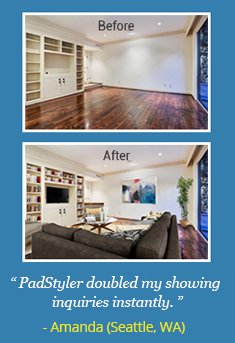
Empty Rooms
Proper staging helps buyers understand room functionality.
Poor Lighting
Natural lighting creates welcoming spaces.
Inconsistent Branding
Maintain consistent colours, fonts, and messaging across all marketing materials.
Choosing the Right 3D Rendering Partner
Not every rendering provider delivers the same quality.
Look for companies offering:
- Photorealistic rendering
- Fast turnaround
- Interior visualization
- Exterior visualization
- Virtual staging
- 3D floor plans
- Animation services
- Virtual walkthroughs
- High-resolution outputs
- Marketing-ready images
Experienced visualization partners understand both architecture and buyer psychology.
Future Trends in Residential Development Marketing
Technology continues to reshape property marketing.
Emerging trends include:
- AI-powered rendering
- Real-time customization
- Interactive configurators
- Virtual Reality property tours
- Augmented Reality visualization
- Drone-integrated site visualization
- Digital twins
- AI-enhanced staging
Developers who adopt these innovations early will gain a competitive advantage.
Why Buyers Prefer Visual Experiences
Research consistently shows that people process visual information much faster than text. Instead of studying technical drawings, buyers can instantly understand a property’s size, layout, and design through realistic renderings. This improves confidence, shortens the decision-making process, and creates a stronger emotional connection with the future home. In a market where first impressions matter, visually engaging presentations often outperform traditional sales materials.
Conclusion
Using 3D Renderings to Pre-Sell Residential Developments has transformed modern real estate marketing. Developers no longer need to rely solely on blueprints or construction progress to convince buyers. Instead, they can present complete, photorealistic visions of future communities that inspire confidence, build trust, and accelerate purchasing decisions.
From realistic exterior designs and beautifully staged interiors to immersive virtual walkthroughs and interactive floor plans, 3D renderings create memorable buyer experiences that drive pre-sales and strengthen project success. As buyer expectations continue to evolve, adopting advanced visualization technology is no longer optional—it is a strategic investment that helps residential developers stand out in an increasingly competitive market.