The Future of AI-Powered Real Estate Visualization
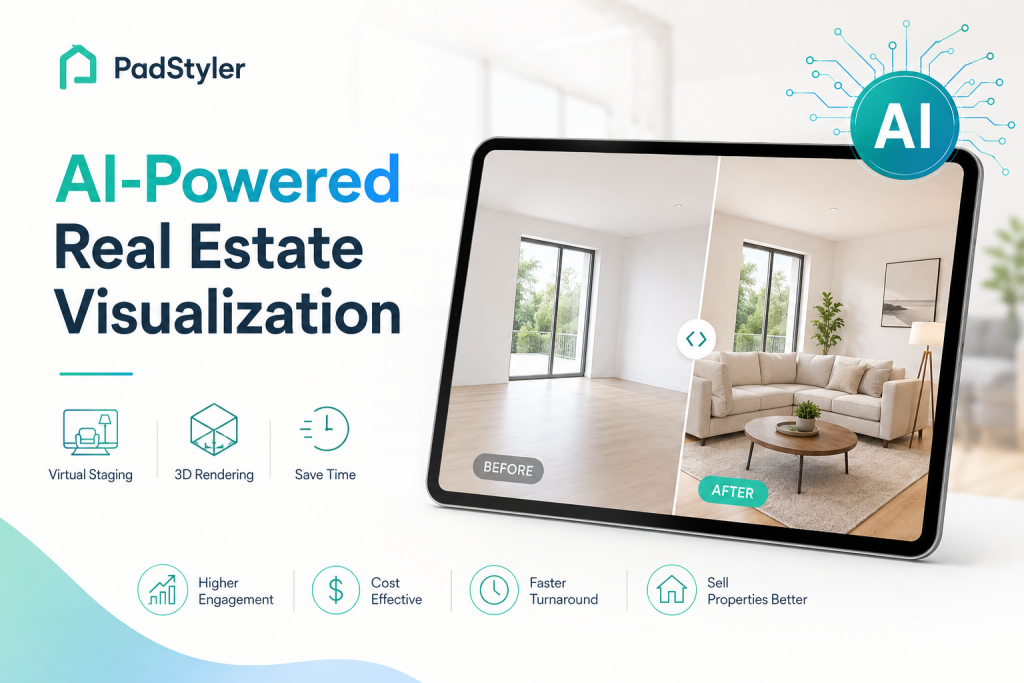
AI-Powered Real Estate Visualization is rapidly changing the way properties are presented, marketed, and experienced online. In a digital-first real estate market, buyers often form their first impression of a property through listing images before they ever schedule a showing. Artificial intelligence, virtual staging, 3D rendering, and other visualization technologies are making those first impressions more powerful, realistic, and engaging. With PadStyler, real estate professionals can transform vacant, outdated, or unfinished spaces into compelling visual experiences that help potential buyers understand a property’s possibilities.
For real estate agents, developers, investors, builders, and property marketers, this evolution is much more than a design trend. It represents a fundamental change in how real estate can be marketed. Instead of expecting buyers to imagine how an empty room might look with furniture or how an outdated property could appear after renovation, advanced visualization can show that potential directly.
As AI continues to evolve, the future of real estate marketing will increasingly revolve around faster visualization, personalized design concepts, immersive property experiences, and more efficient marketing workflows.
Why AI-Powered Real Estate Visualization Matters
Property marketing has always depended heavily on visual presentation. Buyers want to understand not only the dimensions and features of a home but also how the space could support their lifestyle.
This can be difficult when a listing contains vacant rooms, dated interiors, unfinished construction, or spaces that need renovation. Empty rooms may appear smaller or colder than they really are, while outdated finishes can distract buyers from valuable architectural features.
AI-Powered Real Estate Visualization helps bridge the gap between a property’s current appearance and its potential.
Instead of relying entirely on imagination, buyers can see thoughtfully presented rooms, updated interiors, potential renovation concepts, and realistic visual interpretations of a property.
For sellers and real estate professionals, this means the marketing conversation can shift from “Here is what the property looks like today” to “Here is what this property could become.”
That difference can make a listing considerably more engaging.
How AI-Powered Real Estate Visualization Is Changing Property Marketing
Artificial intelligence has introduced new opportunities to make visualization workflows faster and more adaptable.
Traditional property marketing may involve physical staging, furniture transportation, photography, design consultations, and lengthy rendering processes. While these approaches still have their place, digital visualization provides an increasingly flexible alternative.
With modern visualization workflows, property images can be transformed into polished marketing assets without physically furnishing every room.
Faster Visual Content Creation
Speed is particularly valuable in real estate.
Agents and investors often want to launch listings quickly so properties can begin generating interest as soon as possible. Waiting for furniture delivery, physical staging, renovations, or complex visualization workflows can slow down marketing.
AI-assisted workflows can help reduce the time required to develop visual concepts and marketing-ready property imagery.
Faster visualization allows real estate professionals to spend more time focusing on leads, negotiations, showings, and transactions rather than coordinating every physical element of property presentation.
Better Visualization of Property Potential
One of the biggest challenges buyers face is imagining change.
A buyer may struggle to visualize a vacant living room with furniture or picture an outdated kitchen with modern finishes. Likewise, investors evaluating fixer-uppers may need a clearer understanding of what renovation opportunities could look like.
PadStyler’s visualization services help communicate these possibilities through realistic visual presentations.
When buyers can see a property’s potential instead of simply being told about it, the listing can become easier to understand and more memorable.
AI Virtual Staging and the Future of Listing Photography
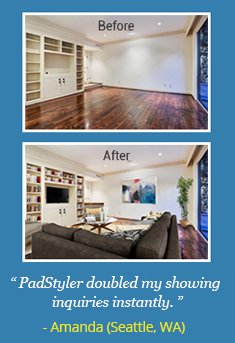
Virtual staging has become an important part of modern real estate marketing because it can turn empty spaces into warm, inviting interiors without requiring physical furniture.
PadStyler’s approach to virtual staging focuses on realistic furniture, décor, room proportions, lighting, and design choices intended to complement the original property.
Helping Empty Rooms Feel Like Homes
Vacant properties present a unique marketing challenge.
Without furniture, buyers may have difficulty judging room dimensions or understanding how different spaces can function. A vacant room is simply an empty area; a carefully staged room communicates purpose.
Virtual staging can show how a living room accommodates seating, how a bedroom fits furniture, or how an open-plan space could be divided into living and dining zones.
This provides context while making online listings more visually engaging.
Designing for Different Buyer Audiences
Another exciting development in AI real estate visualization is the potential for greater personalization.
Different properties appeal to different audiences. A luxury apartment might benefit from sophisticated contemporary styling, while a suburban family home may need a warmer, more practical interior presentation.
Visualization makes it possible to explore design directions that support a property’s positioning and intended audience.
In the future, increasingly intelligent visualization systems may make this personalization even more precise, helping marketers create imagery based on property type, location, architectural style, and target buyer preferences.
AI-Powered Real Estate Visualization for Renovations
Virtual renovation is another area where AI-assisted visualization has significant potential.
Properties do not always enter the market in perfect condition. Some contain dated kitchens, old flooring, worn finishes, or interiors that need substantial modernization.
For many buyers, these issues can become obstacles because estimating the finished result is difficult.
AI-Powered Real Estate Visualization can provide renovation previews that demonstrate how an existing property could look after improvements.
Potential transformations can include:
- Updated flooring, walls, and finishes
- Modernized kitchens and bathrooms
- New furniture and interior décor
- Contemporary color palettes
- Improved presentation of outdated spaces
- Different interior design styles
- Visual concepts for unfinished properties
These concepts can be especially useful for real estate investors and professionals marketing fixer-uppers because they allow the property’s future potential to become part of the marketing story.
3D Rendering and AI Real Estate Visualization
The future of property marketing extends beyond existing homes.
Developers and builders frequently need to market properties before construction is complete. In these situations, traditional photography simply cannot communicate the finished project.
3D architectural rendering helps turn plans and design concepts into realistic property visuals.
High-quality renders can showcase exterior architecture, interiors, materials, lighting, landscaping, amenities, and lifestyle concepts before the physical space exists.
This can support marketing for:
- New residential developments
- Condominiums and apartments
- Luxury properties
- Commercial real estate
- Pre-construction projects
- Renovation developments
For developers, visualization can therefore become part of the sales strategy long before construction is completed.
3D Floor Plans Make Properties Easier to Understand
Floor plans answer a different but equally important buyer question: How does the property fit together?
Listing photographs can show individual rooms beautifully, but they do not always communicate how those rooms connect.
3D floor plans can provide buyers with a more intuitive understanding of layout, circulation, room relationships, and potential furniture placement.
PadStyler marketing materials emphasize digital floor plans alongside realistic visuals, 3D rendering, staging, and multi-device presentation.
Combining floor plans with virtual staging and realistic rendering creates a more complete visual marketing experience. Buyers can understand both the emotional appeal of individual rooms and the practical functionality of the overall property.
Key Benefits of AI-Powered Real Estate Visualization
As AI and visualization technologies continue developing, real estate professionals can benefit in several important ways:
- Stronger first impressions: Professionally presented visuals can help listings attract attention in crowded property marketplaces.
- Faster marketing workflows: Digital visualization reduces dependence on physical staging and other time-consuming preparation.
- Better buyer understanding: Virtual staging, renovation visualization, and floor plans make spaces and their potential easier to interpret.
- Greater design flexibility: Different furniture arrangements, styles, and concepts can be explored without physically changing the property.
- Improved marketing versatility: Visual assets can support property portals, websites, social media, presentations, advertisements, and email campaigns.
- Better presentation of unfinished properties: Developers can market projects using realistic visualization before construction is complete.
- More compelling storytelling: Visualization allows marketers to sell not only the existing property but also a vision of the lifestyle it could offer.
How AI Real Estate Visualization Can Improve Buyer Engagement
Real estate is both a financial and emotional decision.
Buyers compare square footage, location, pricing, amenities, and property condition, but they also respond emotionally to spaces.
They ask themselves:
Can I imagine living here?
Will my furniture fit?
Could this become my dream kitchen?
What would this property look like after renovation?
Visual content helps answer these questions faster than written descriptions alone.
PadStyler’s internal marketing materials similarly emphasize that realistic virtual transformations can help buyers understand property potential and contribute to increased interest and engagement.
The future of real estate visualization will therefore involve more than producing attractive images. It will focus on creating visual experiences that reduce uncertainty and make properties easier for buyers to evaluate.
The Role of Human Creativity in AI-Powered Real Estate Visualization
Artificial intelligence can accelerate workflows, but effective real estate visualization still requires thoughtful creative decisions.
Furniture must suit the scale of a room. Lighting needs to appear natural. Interior styles should complement the architecture. Décor should enhance rather than overwhelm the property.
Most importantly, visualization needs to remain believable.
PadStyler’s existing approach emphasizes analyzing room dimensions, lighting conditions, and architectural details while using realistic furniture models and advanced rendering techniques to maintain authenticity.
The strongest future workflows are therefore likely to combine the efficiency of AI with professional visual judgment.
AI can support speed, experimentation, and scalability, while human expertise provides context, quality control, aesthetic direction, and realism.
What Is Next for AI-Powered Real Estate Visualization?
The next stage of AI-Powered Real Estate Visualization will likely make property marketing increasingly interactive and personalized.
Several trends could shape the industry:
More Personalized Property Experiences
Buyers may increasingly expect property visuals that reflect different design preferences and lifestyles. The same room could potentially be presented in modern, minimalist, traditional, luxury, or Scandinavian-inspired styles.
More Immersive Visualization
Virtual staging, architectural rendering, 3D floor plans, virtual tours, and other visualization technologies may increasingly work together to provide richer digital property experiences.
Faster Real Estate Marketing
As visualization workflows become more efficient, agents, developers, and investors will be able to produce professional marketing assets faster and launch listings sooner.
Smarter Design Assistance
AI may become increasingly useful for identifying suitable furniture arrangements, interior styles, finishes, and visual concepts based on a property’s architecture and intended market.
Greater Scalability
Brokerages, property managers, developers, and investors managing large portfolios will be able to apply visualization workflows across more properties without the logistical complexity associated with physically staging every space.
Why PadStyler Is Positioned for the Future of Real Estate Visualization
The future of property marketing will belong to professionals who can communicate value quickly and visually.
PadStyler helps bridge the gap between a property’s existing condition and the experience buyers need to see. Through virtual staging, renovation visualization, 3D rendering, floor plans, and related visualization solutions, properties can be presented in ways that are easier to understand and more engaging for online audiences.
PadStyler’s existing materials position high-quality 3D rendering as a way to help buyers understand unbuilt properties and support pre-sale marketing.
This flexibility makes professional visualization increasingly relevant throughout the property lifecycle.
Conclusion
AI-Powered Real Estate Visualization represents an important shift in how properties are presented and experienced. Buyers increasingly begin their property journeys online, making strong digital presentation essential for attracting attention and communicating value.
AI-assisted virtual staging, 3D rendering, renovation visualization, and digital floor plans can transform ordinary property marketing into a more compelling visual experience. Rather than forcing buyers to imagine possibilities, these technologies can help show them.
For real estate agents, developers, investors, and property marketers, embracing visualization technology means creating listings that are more informative, engaging, and prepared for the future of digital real estate.
As artificial intelligence continues to advance, visualization will become faster, more flexible, and increasingly personalized. PadStyler is positioned to help real estate professionals take advantage of that transformation—turning spaces, concepts, and possibilities into visuals that help buyers see what comes next.