The real estate industry is changing faster than ever, and 2026 is becoming the year where artificial intelligence transforms how properties are marketed online. Buyers now expect visually appealing listings, faster responses, and immersive digital experiences before they even schedule a showing. Because of this shift, more real estate professionals are turning toward AI virtual staging to stay competitive in a crowded housing market.
Traditional marketing methods are no longer enough to capture buyer attention. Empty rooms feel cold and uninspiring, while physical staging often costs thousands of dollars and takes days or even weeks to complete. Realtors need a faster, more affordable, and scalable solution that helps listings stand out instantly. This is exactly why AI virtual staging has become one of the biggest trends in modern real estate marketing.
Platforms like PadStyler are helping agents transform vacant or outdated properties into visually stunning homes within minutes. AI-powered staging technology allows Realtors to redesign interiors digitally, create multiple design styles, and attract buyers online without the expense of traditional staging companies.
In 2026, Realtors are not just experimenting with AI staging anymore. They are fully adopting it as a core marketing strategy. From luxury brokers to independent agents, the industry is recognizing that AI-generated visuals increase engagement, improve listing performance, and help homes sell faster.
The Rise of AI in Real Estate Marketing
Artificial intelligence is now deeply integrated into the real estate industry. Agents use AI tools for lead generation, customer communication, property valuation, market analysis, and content creation. Virtual staging is one of the fastest-growing segments because it directly impacts how buyers emotionally connect with a property.
Modern buyers start their home search online. Most purchasing decisions begin with scrolling through listing photos on websites and mobile apps. If the visuals fail to capture attention within a few seconds, buyers simply move on to another listing.
This behavior has pushed Realtors to rethink their marketing strategies. Empty rooms no longer perform well in digital marketplaces because buyers struggle to visualize the potential of the space. AI virtual staging solves this problem by creating warm, furnished, and professionally designed interiors that help buyers imagine themselves living in the home.
The ability to generate realistic staging instantly has completely changed how agents market properties. Instead of waiting for furniture delivery, staging teams, and photographers, Realtors can now upload an image and receive a beautifully staged version almost immediately.
This speed is becoming a major competitive advantage in 2026.
Why Traditional Staging Is Losing Popularity
Traditional staging still has value for certain luxury properties and high-end showings, but many Realtors are moving away from it because of the high costs and logistical challenges involved.
Physical staging requires furniture rentals, transportation, setup crews, decorators, and scheduling coordination. Depending on the size of the property, staging can cost thousands of dollars every month. For many agents, especially those handling multiple listings, these expenses quickly become difficult to justify.
In contrast, AI virtual staging provides similar visual impact at a fraction of the cost. Realtors can digitally furnish an entire property without moving a single piece of furniture. This makes it easier to market vacant homes, rental units, investment properties, and renovation projects.
Another issue with traditional staging is time. In fast-moving markets, agents cannot afford delays. Waiting several days for staging installation can slow down listing launches and reduce momentum. AI staging eliminates these delays completely.
Realtors in 2026 prioritize speed, flexibility, and return on investment. AI virtual staging delivers all three.
AI Virtual Staging Creates Stronger First Impressions
First impressions matter more than ever in online real estate marketing. Buyers form opinions about a property within seconds of viewing listing photos. A visually appealing image immediately creates emotional interest and encourages buyers to explore further.
AI virtual staging transforms plain rooms into aspirational living spaces. Empty bedrooms become cozy retreats. Vacant living rooms turn into stylish entertainment areas. Outdated interiors appear modern and inviting.
This emotional connection is critical because buyers do not simply purchase square footage. They purchase a lifestyle.
Well-designed staged images help buyers visualize how furniture fits into a room, how lighting enhances the atmosphere, and how the home can support their daily lives. These visuals increase engagement, generate more clicks, and lead to higher-quality inquiries.
Properties with professionally staged images consistently outperform empty listings online because they attract more attention across real estate platforms and social media channels.
Faster Listing Preparation Gives Realtors an Advantage
In competitive markets, timing can determine whether a property receives immediate interest or sits unnoticed online.
AI virtual staging dramatically reduces preparation time for new listings. Realtors no longer need to coordinate photographers, furniture companies, and decorators before launching a property. Instead, they can upload photos and generate staged images within minutes.
This speed helps agents market homes faster while maintaining professional presentation quality.
In 2026, many Realtors handle larger listing volumes and rely on automation to improve efficiency. AI staging allows them to streamline operations without sacrificing visual quality.
Properties can also be customized quickly for different buyer demographics. A single room can be staged in modern, luxury, minimalist, Scandinavian, or family-friendly styles depending on the target audience.
This flexibility gives Realtors a powerful marketing advantage.
AI Staging Helps Listings Perform Better Online
Online visibility is one of the biggest priorities in modern real estate marketing. Listings compete against thousands of other properties across major platforms, and visual presentation often determines which homes receive attention.
AI virtual staging helps increase listing engagement because staged photos are more attractive in search results, social media posts, email campaigns, and digital advertisements.
Buyers are naturally drawn toward visually polished homes. This increased attention leads to more property views, longer browsing times, and higher inquiry rates.
In many cases, staged listings also receive more shares on social media platforms, which expands exposure organically.
Realtors using AI-generated visuals often notice improvements in click-through rates and overall marketing performance because the images immediately stand out from competing listings.
Buyers Expect Better Digital Experiences in 2026
Consumer expectations have evolved significantly over the last few years. Modern buyers are accustomed to high-quality digital experiences across every industry, including real estate.
They expect listings to feel immersive, polished, and professionally presented. Basic property photos are no longer enough.
AI virtual staging meets these expectations by creating realistic interiors that resemble professionally designed homes. Buyers can better understand room functionality, layout possibilities, and design potential.
This is especially important for younger buyers who rely heavily on online research before scheduling property tours.
Millennial and Gen Z buyers respond strongly to visually engaging content because they spend large amounts of time consuming digital media on platforms like Instagram, YouTube, and TikTok.
Realtors who embrace AI staging are aligning their marketing strategies with modern buyer behavior.
Cost Efficiency Is Driving Industry Adoption
One of the biggest reasons Realtors are switching to AI virtual staging in 2026 is simple: cost savings.
Traditional staging expenses can significantly reduce profitability, especially for mid-range properties or investment listings. AI staging provides a more affordable alternative while still delivering impressive visual results.
Agents can stage multiple rooms for a small fraction of the cost of physical furniture rentals. This makes professional marketing accessible even for smaller agencies and independent Realtors.
Cost efficiency also allows agents to experiment with multiple design styles without additional financial risk. Instead of committing to one staging setup, they can create several versions tailored to different audiences.
This flexibility improves marketing performance while keeping expenses under control.
AI Staging Supports Remote Real Estate Sales
Remote buying activity continues to grow in 2026. Many buyers relocate across states or countries and rely heavily on digital property tours before making decisions.
AI virtual staging improves remote property marketing because it creates visually engaging spaces that help online buyers understand the home better.
Vacant properties often appear smaller and less inviting in photos. AI-generated furnishings solve this issue by adding scale, warmth, and personality.
For international buyers and investors, strong visuals are especially important because they may not visit the property in person until much later in the transaction process.
Realtors who use AI staging can market homes more effectively to remote audiences and expand their reach beyond local buyers.
Social Media Marketing Is Fueling AI Staging Growth
Social media has become one of the most powerful marketing channels for Realtors. Platforms like Instagram, Facebook, LinkedIn, and TikTok heavily prioritize visual content.
AI virtual staging helps agents create eye-catching property posts that generate engagement and attract potential clients.
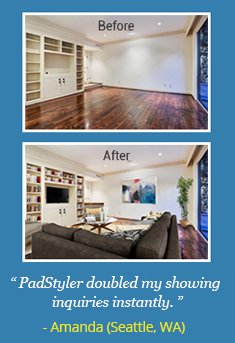
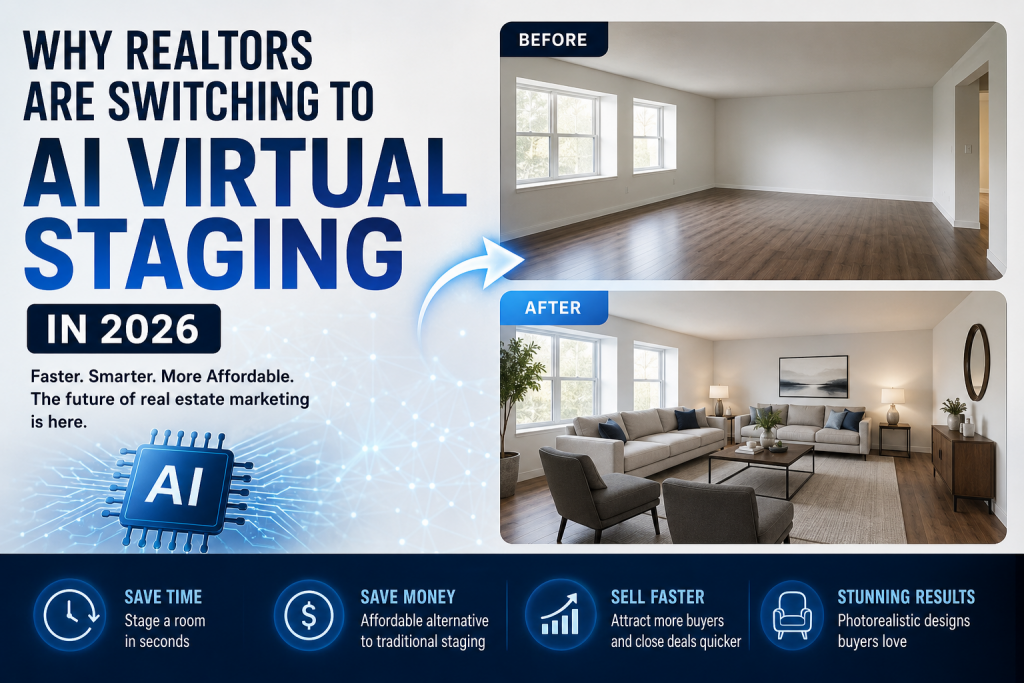
Before-and-after transformations are particularly popular because they immediately showcase the power of AI design technology. These posts often receive strong interaction rates, which increases brand visibility for Realtors.
Social media algorithms favor visually compelling content, and staged property images perform far better than empty rooms.
Agents who consistently share AI-enhanced listings position themselves as innovative, tech-forward professionals.
This modern branding helps Realtors attract both buyers and sellers in competitive markets.
AI Helps Realtors Win More Listings
Homeowners want agents who can market their properties effectively. In listing presentations, Realtors who demonstrate advanced AI marketing capabilities often gain a significant advantage over competitors.
Showing sellers how their vacant or outdated property can be transformed digitally creates excitement and confidence.
Sellers recognize that professional visuals improve buyer interest and increase perceived property value.
AI virtual staging also allows Realtors to present renovation possibilities for outdated homes. Instead of focusing on flaws, agents can show potential.
This ability to visualize transformation helps sellers see the marketing value immediately.
In 2026, AI-powered marketing is becoming a differentiator that helps Realtors secure more listings and build stronger client trust.
AI Virtual Staging Improves Perceived Property Value
Presentation influences perception. A well-designed room feels more valuable, more functional, and more desirable.
AI staging enhances property presentation by creating modern, stylish interiors that appeal to buyer emotions. This improved presentation often increases perceived value even before buyers schedule a showing.
When buyers emotionally connect with a property online, they are more likely to book tours quickly and submit competitive offers.
Professionally staged visuals also help properties appear move-in ready, which reduces buyer hesitation.
In highly competitive markets, these psychological advantages can significantly impact sales performance. Continue reading